How to Order at a Noodle Shop: A Simple 3-Step Guide to "One Main, One Soup, One Side"
Ordering at a noodle shop gets stuck mostly because every choice lands at the same moment. Split the meal into three slots: one main, one soup and one side. Answer dry or soup first, match the soup to the main, and rotate the side between blanched, braised and cold dishes. Then put a weekly rotation table on your phone, and you can fill out the order sheet while you wait in line.
Translated from the Traditional Chinese original.
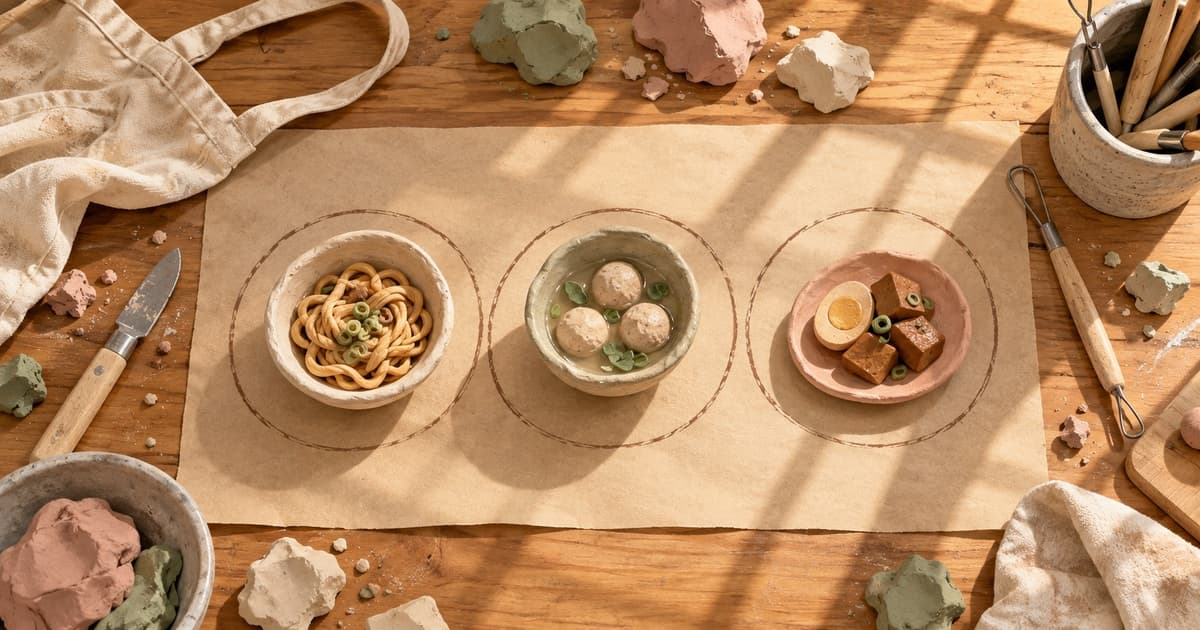
If you want to order quickly at a noodle shop, split the meal into three slots, "one main, one soup, one side," and fill them in order. First decide between dry noodles and noodle soup. Then pick a soup that goes with your main. For the side, rotate between three types: blanched, braised and cold. Once the order of the three slots is set, standing in front of the menu on the wall means answering just one question at a time.
The scenario below is adapted from everyday situations, and the name is made up. This is only a suggestion for organizing your day, so adjust it to fit your own situation.
Jiaying works near an office building and usually walks to the noodle shop at the end of the alley for her lunch break. The whole wall by the door is covered with the menu. There are dry noodles, noodle soups, flat rice noodles and glass noodles, then wonton soup and pork ball soup next to them, and braised side dishes after that. The text in every box is packed tight. On the table sits a stack of order sheets and a ballpoint pen. Customers tick their own boxes and take the sheet to the counter.
She always stood in front of that wall for a long time. People were lining up behind her, and her coworkers had filled out their sheets long ago, but her pen was still stuck on the first column while she wondered whether to get dry or soup today. In the end she would just tick the same bowl as last time. After a month, Jiaying realized she was eating the same bowl of noodles almost every day. Whenever she wanted to try something different, she gave up because there was no time to think.
Then she changed her approach. Before walking into the shop, she splits the meal into three slots and fills them one by one in a fixed order. There are no rules to memorize. She just swaps the big question of "what should I eat" for three small questions and answers one at a time.
Only twenty boxes on the wall, but you still can't fill out the order sheet
Noodle shop menus are built from combinations. The same flavor can come with different noodles, and dry and soup versions each have their own set. The wall looks like twenty boxes, but the possible combinations are several times more.
The order sheet itself has a lot of columns too: noodle type, flavor, large or small bowl, egg or no egg, spicy or not, plus soup and sides. With that many columns, it's easy to start hesitating at the very first one.
At lunchtime the shop is busy and people are waiting behind you. The more rushed you feel, the harder it is to decide. At some shops the side dishes sit in a fridge or a glass case, so you have to walk over to see what's available today, which adds one more choice on the spot.
All of this happens at the same moment, and that's why you get stuck. There's no shortage of options. What's missing is an order. Set the order first, answer only one question at each step, and ordering gets much faster.
Fill three slots in order: main, soup, side
From walking through the door to handing in your order sheet, follow the three steps below. It takes about as long as a glance at the menu.
Slot one, "one main": answer dry or soup first
- Decide whether you want dry noodles or noodle soup today. If it's cold out and you want something hot, go for noodle soup. If you're short on time, go for dry noodles.
- Pick the noodles: thin noodles, thick noodles, yi mein, flat rice noodles, glass noodles or rice vermicelli. Choose one without comparing.
- Look at the flavor last: sesame paste, minced pork sauce, pickled mustard greens with shredded pork, braised or clear broth. If you can't pick a flavor, choose the one you haven't had yet this week.
Dry or soup has only two answers. Answer this question first, and you can ignore half the boxes on the wall.
Slot two, "one soup": decide based on your main
If your main is dry noodles, pick a bowl from wonton soup, pork ball soup, egg drop soup or miso soup. If your main is already noodle soup, you can skip this slot or swap it for a second side dish. If you go with coworkers, each of you can order a different soup and share a little, which also counts as a change of flavor.
Slot three, "one side": rotate through three types
The side dish case is where people zone out the most. Jiaying splits side dishes into three types and only picks from one type each time:
- Blanched: blanched greens, blanched bean sprouts, blanched sweet potato leaves
- Braised: braised egg, dried tofu, kelp, tofu skin
- Cold: cucumber, wood ear mushroom salad, century egg tofu
Blanched today, braised tomorrow, cold the day after, and you've gone through the full rotation in three days. Just remember which type you had last time, and you won't have to compare everything again each time you stand in front of the case.
A weekly rotation table saved in your phone's notes
If you go to the noodle shop three to five days a week, make a simple table and save it in your phone's notes app. Jiaying's version looks like this:
| Day | One main | One soup | One side |
|---|---|---|---|
| Monday | Dry noodles, sesame paste | Wonton soup | Blanched |
| Tuesday | Noodle soup, pickled mustard greens with shredded pork | Skip, swap for a side | Braised |
| Wednesday | Dry flat rice noodles, minced pork sauce | Pork ball soup | Cold |
| Thursday | Glass noodle soup, clear broth | Skip, swap for a side | Blanched |
| Friday | Free choice | Free choice | Free choice |
Friday is left open so you can order whatever you like, which keeps the table from turning into a chore. If you want to try a new flavor or order the same thing as a coworker, save it for that day.
You don't need to change the table often. Opening it once a month is enough. If you keep skipping a certain combination, replace it. If the shop adds a new item, add it in while you're at it. If even making a whole table sounds like too much, you can keep just the "one main" column.
When the plan doesn't match what's in the shop
It's your turn and you still can't decide
If you only open your notes once you reach the menu, you'll still feel flustered. While you're still in line and before it's your turn, look up today's row, then go straight to the order sheet and tick the boxes.
The side you wanted is sold out
If you go near the end of the lunch rush, a side dish might already be gone. You don't need to rethink the whole meal. Just swap for something in the same type: no braised egg, get dried tofu. No blanched greens, get blanched bean sprouts. That's the point of sorting into types. Your backup is already sitting right next to it.
You're with coworkers and feel awkward taking your time
When a group is ordering, say your three slots out loud first, like "dry noodles with sesame paste, wonton soup, blanched greens," then fill out the sheet. Saying it out loud is faster than going around in circles in your head, and you won't hold up the people behind you.
You keep adding sides and end up taking leftovers home
If you want to add everything you see, the table fills up and you have to bag what you can't finish. Keep sides to a single slot. When you want to try one more, ask a coworker if they'd like to share a plate. You get to taste one more dish, and there won't be a pile of leftovers on the table.
Eating alone and only wanting a bowl of noodle soup
The three slots are a framework to sort out your thinking, and you don't have to fill every one. If all you want today is a bowl of noodle soup, fill in just the first slot. It's fine to leave the other two empty.
Split it the same way at a different shop or a different lunch
Every noodle shop lays out its menu differently, but most can be divided into three areas: mains, soups and sides. Find those three areas on the wall first. Pick your main in the order of "dry or soup, noodle type, flavor," and let the other two slots follow the main.
The first time you visit an unfamiliar shop, look at the dry noodles and noodle soups on the wall separately, then walk over to the side dish case to see which types they have. For the main, you can order the shop's signature bowl, then pick the soup and side using your usual types. Even an unfamiliar menu becomes easy to tackle.
You can take the same approach to other lunches too. Picking dishes at a buffet, packing a lunchbox the night before, ordering a hand-shaken drink and choosing a convenience store breakfast all work the same way. Break one big choice into a few small questions, put them in order, and answer one at a time.
If you often get stuck on small everyday things like these, feel free to subscribe to our lifestyle tips. We regularly put together step-by-step guides you can follow right away on eating out, daily routines, commuting and weekend plans, so you can spend less time hesitating.
This article is for general information only and is not medical advice. Products mentioned are foods or cosmetics, not medicines, and have no medical effect. If you have a specific health condition, please consult a doctor or dietitian. Orders ship within Taiwan only.
Read next
- How to Plan a Work-From-Home Day: Three Switches for Starting Work, Lunch, and Signing Off
- How to Order Luwei: Pick Your Staple, Vegetables, and Toppings in Order, Then Give Your Spice and Sauce Requests All at Once
- How to Order Hot Pot Alone: A Simple Three-Step Guide to Broth, Main Plate, and Add-ons